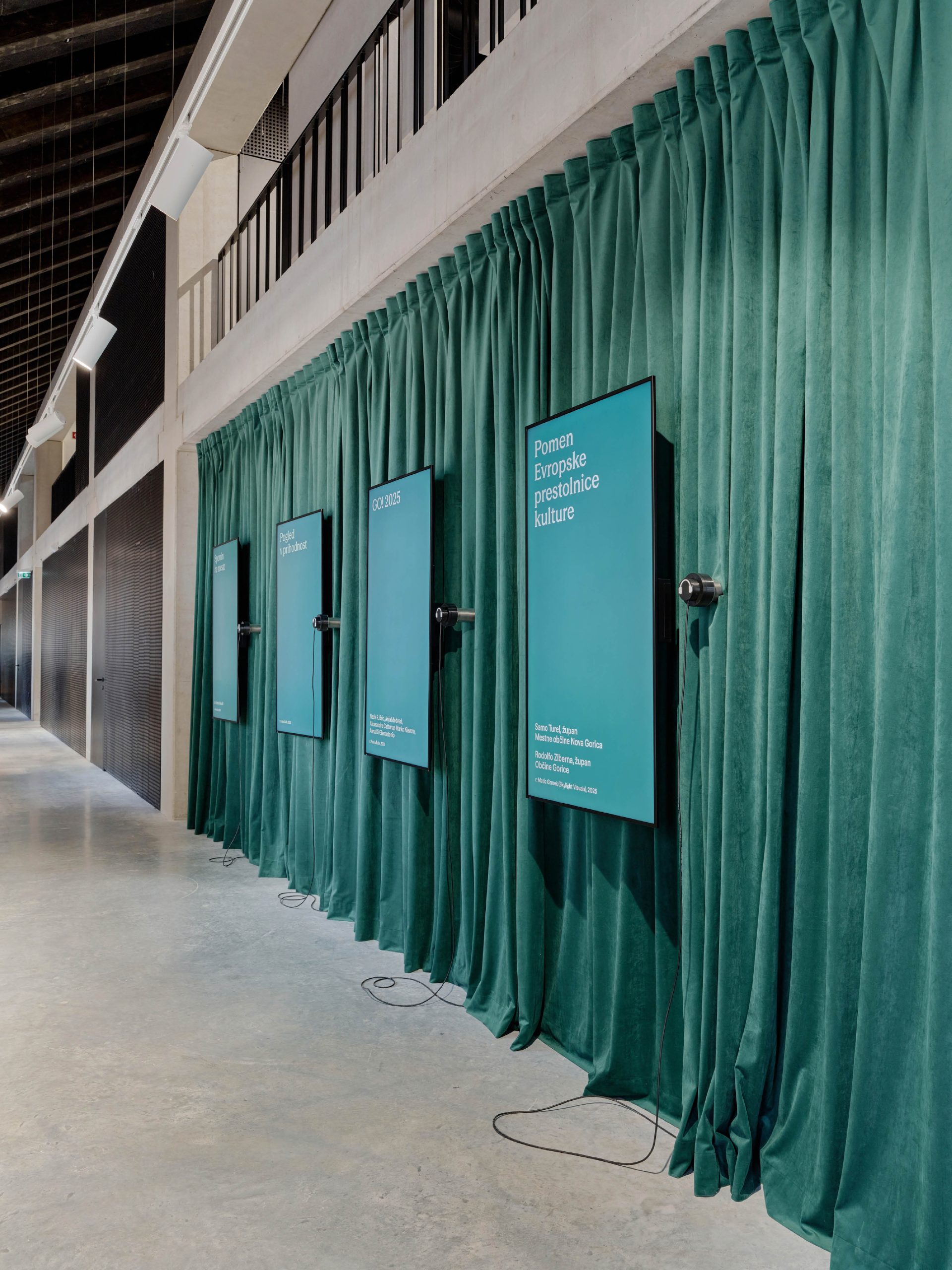
The permanent exhibition City on the Border sheds light on the complex history of the Gorizia border region in the 20th century through the stories of its inhabitants.
1
2
3
4
The permanent exhibition is located on the ground floor of the former railway freight warehouse next to the Nova Gorica railway station building, which was renovated and programmatically revitalized within the framework of the European Capital of Culture 2025 Nova Gorica – Gorizia as The European Platform for the Interpretation of the 20th Century.
5
6
7
8
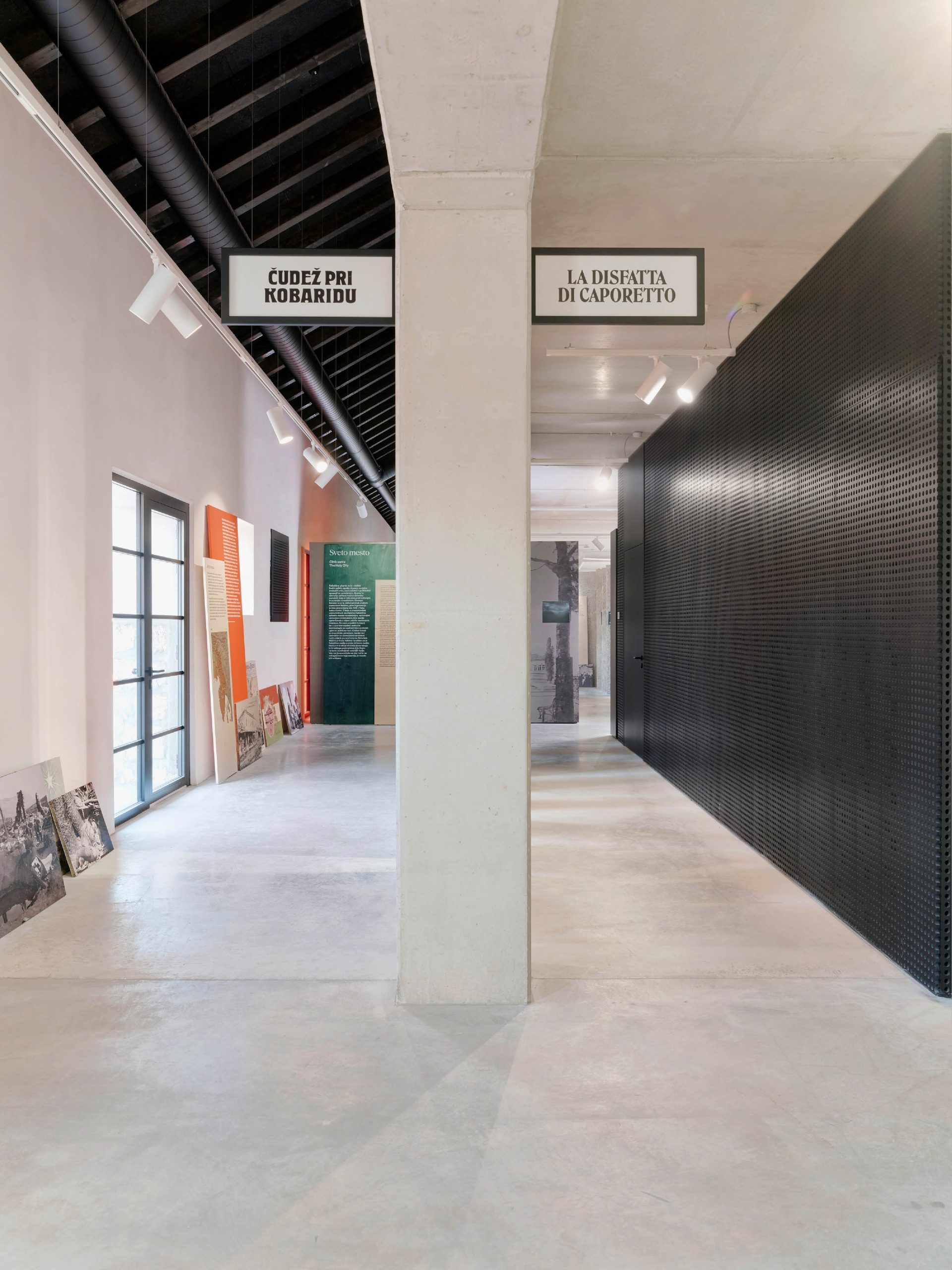
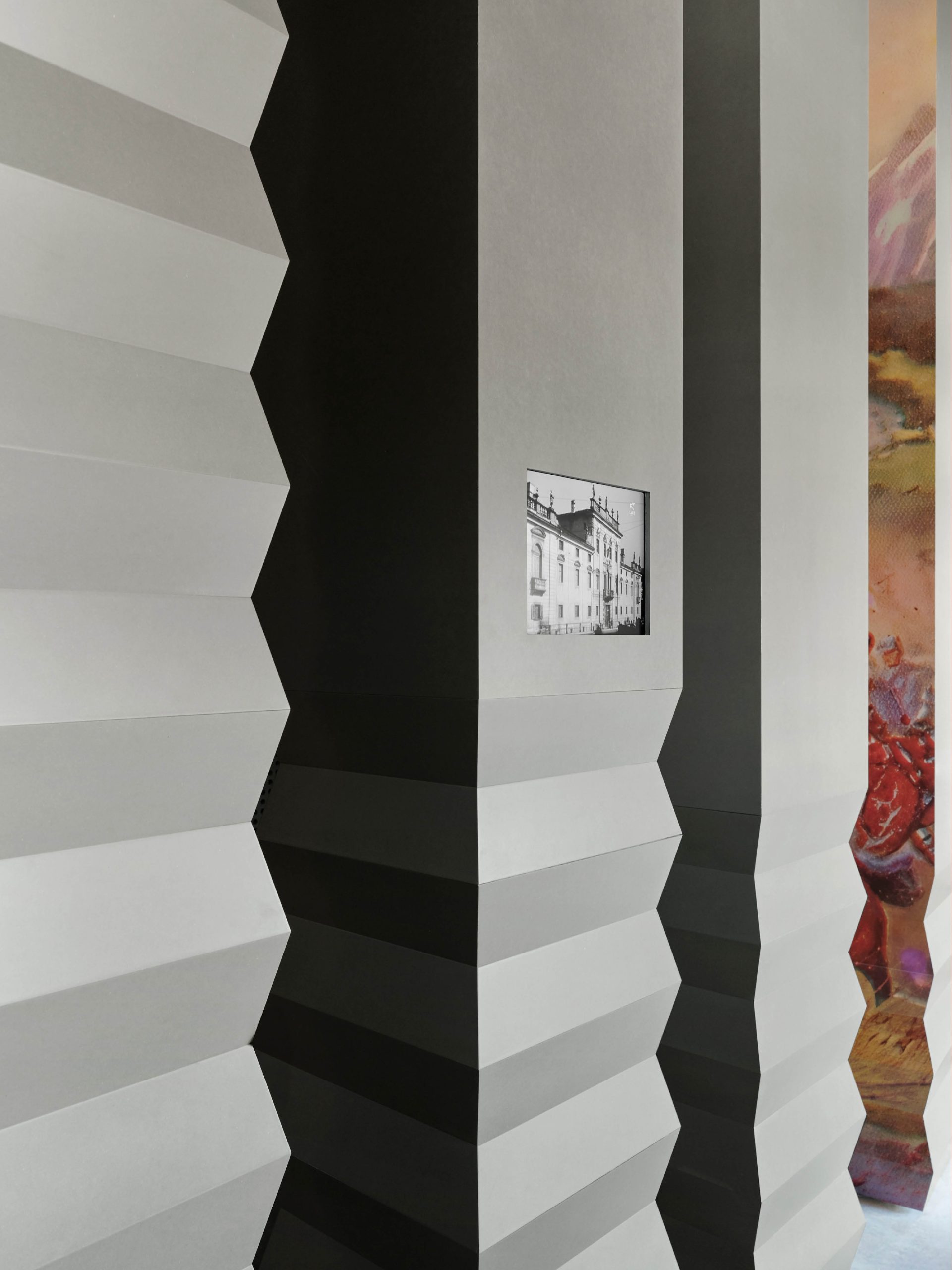
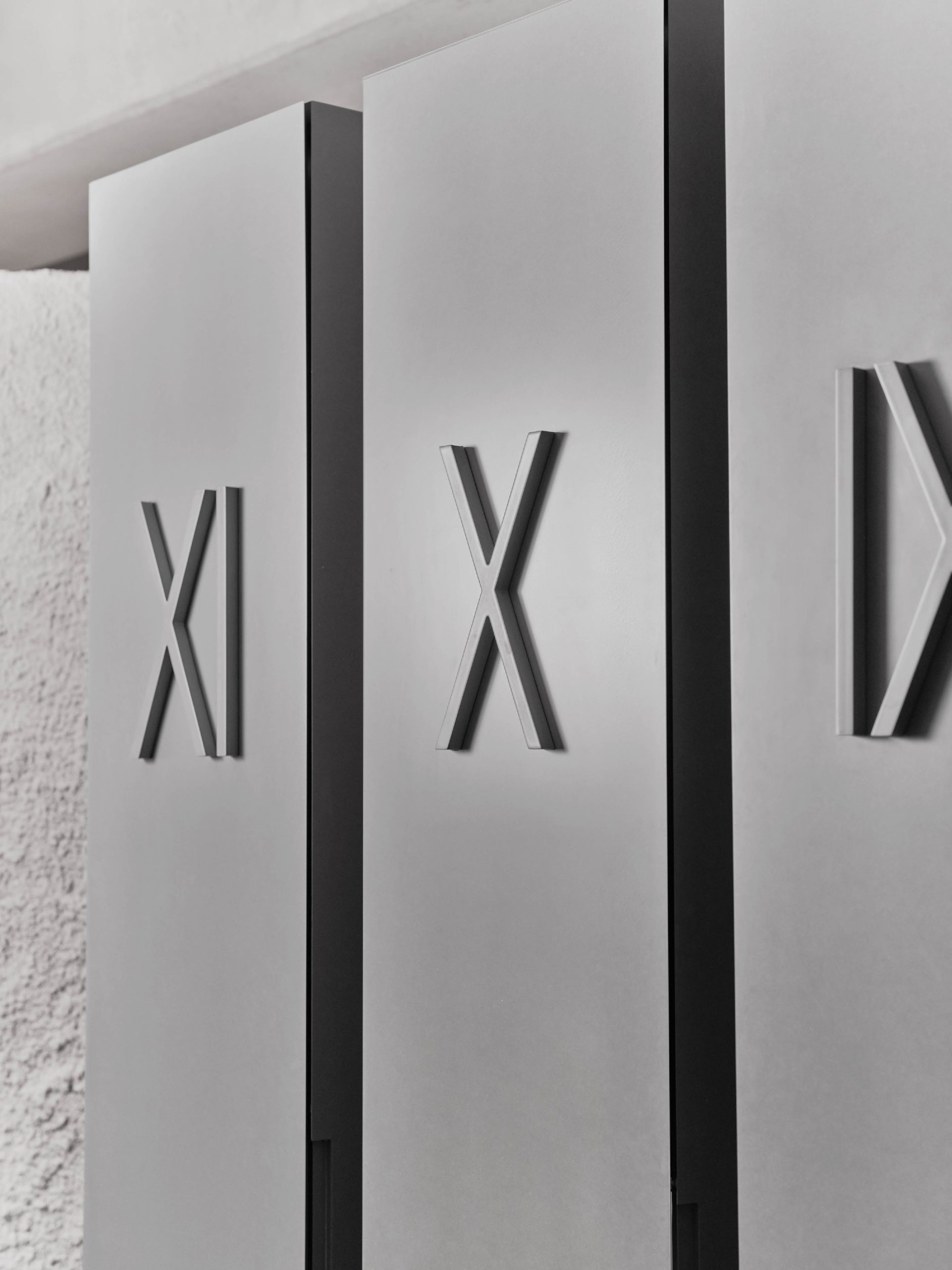
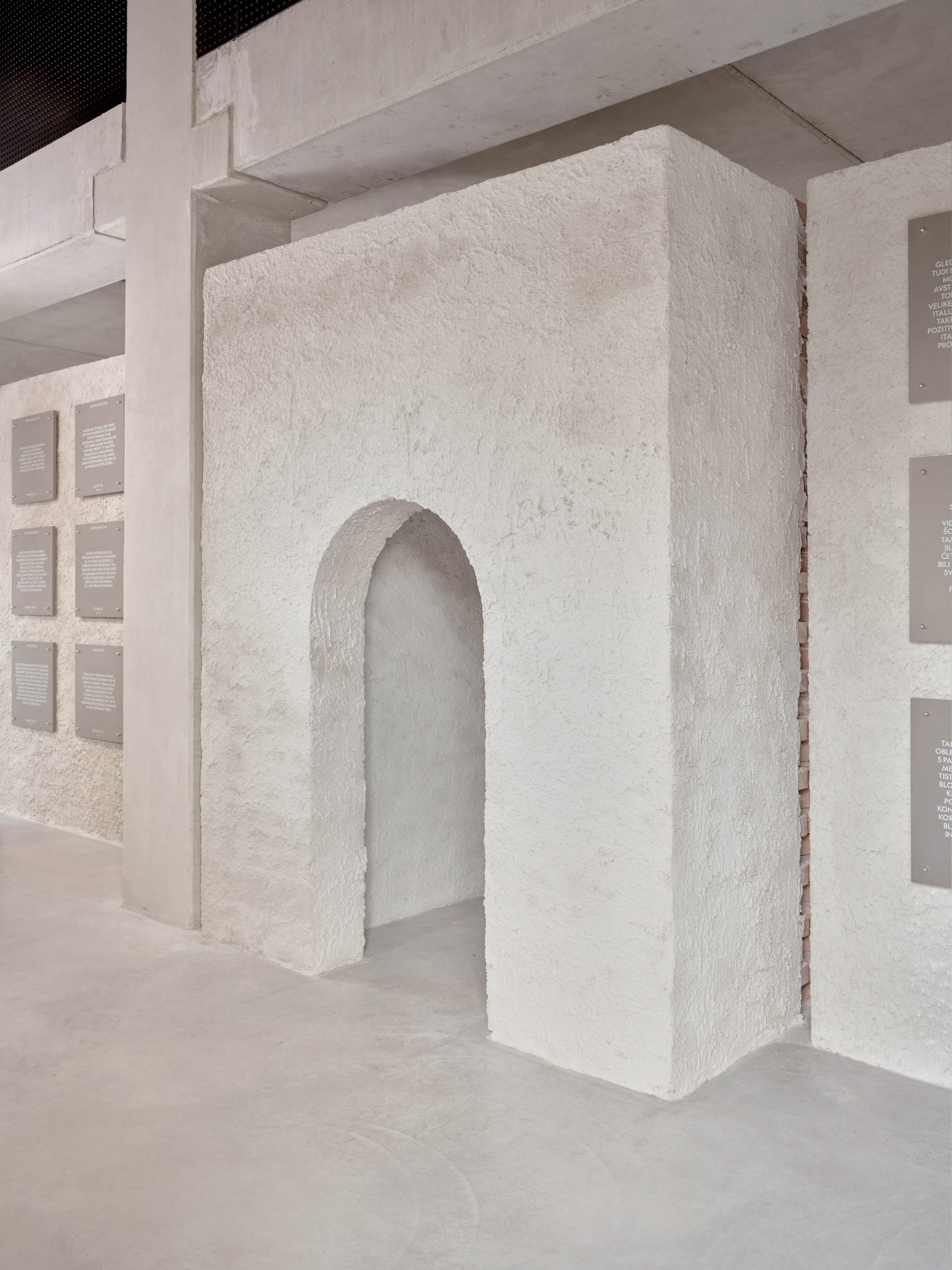
The spatial dramaturgy is structured around seven historical periods of the turbulent 20th century. Rather than unfolding strictly chronologically, these periods are expressed through diverse and often contrasting spatial settings with varying degrees of permeability.
Visitors actively choose their paths, enter smaller subspaces, and engage with haptically rich environments that transform history from a discursive narrative into an embodied experience.
9
10
A MULTICULTURAL CITY
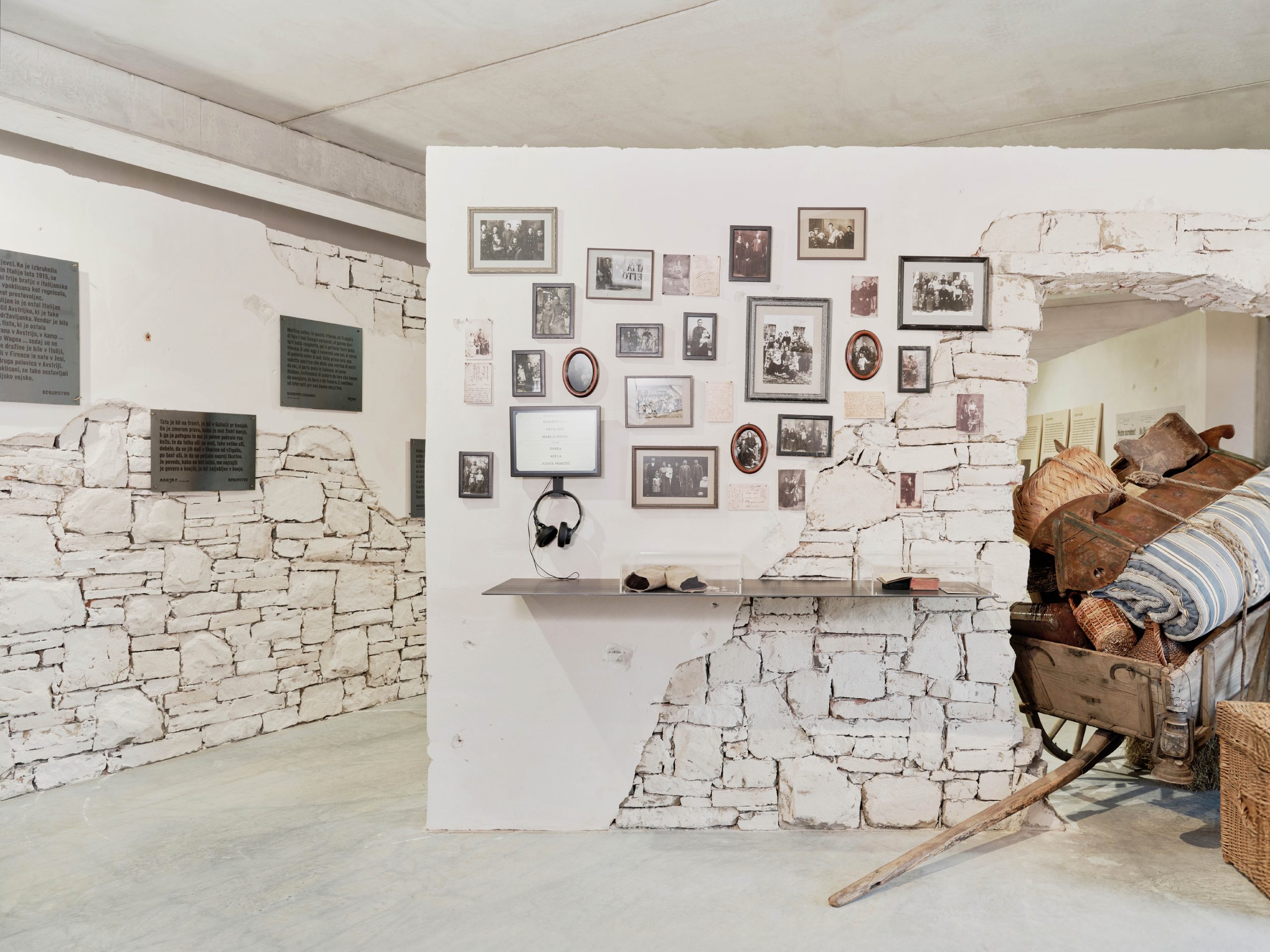
In the 18th and 19th century, Gorizia/Görz/Gorica stood at the crossroads of three nations, a position that shaped regional families, national tensions, linguistic diversity, and the roles of both the bourgeoisie and the Slovenes in the city’s development.
11
12
13
14
THE CITY IN THE RUINS
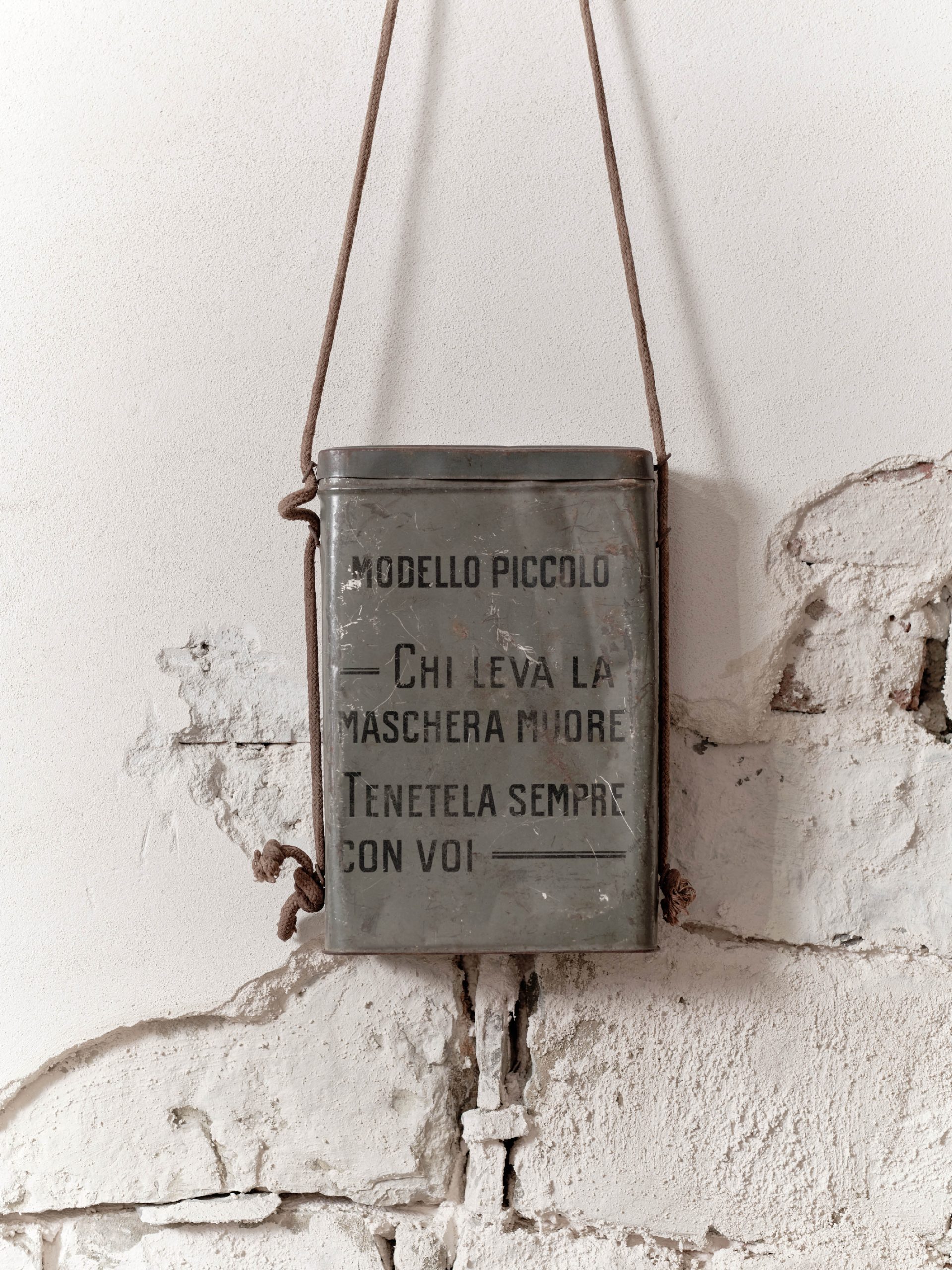
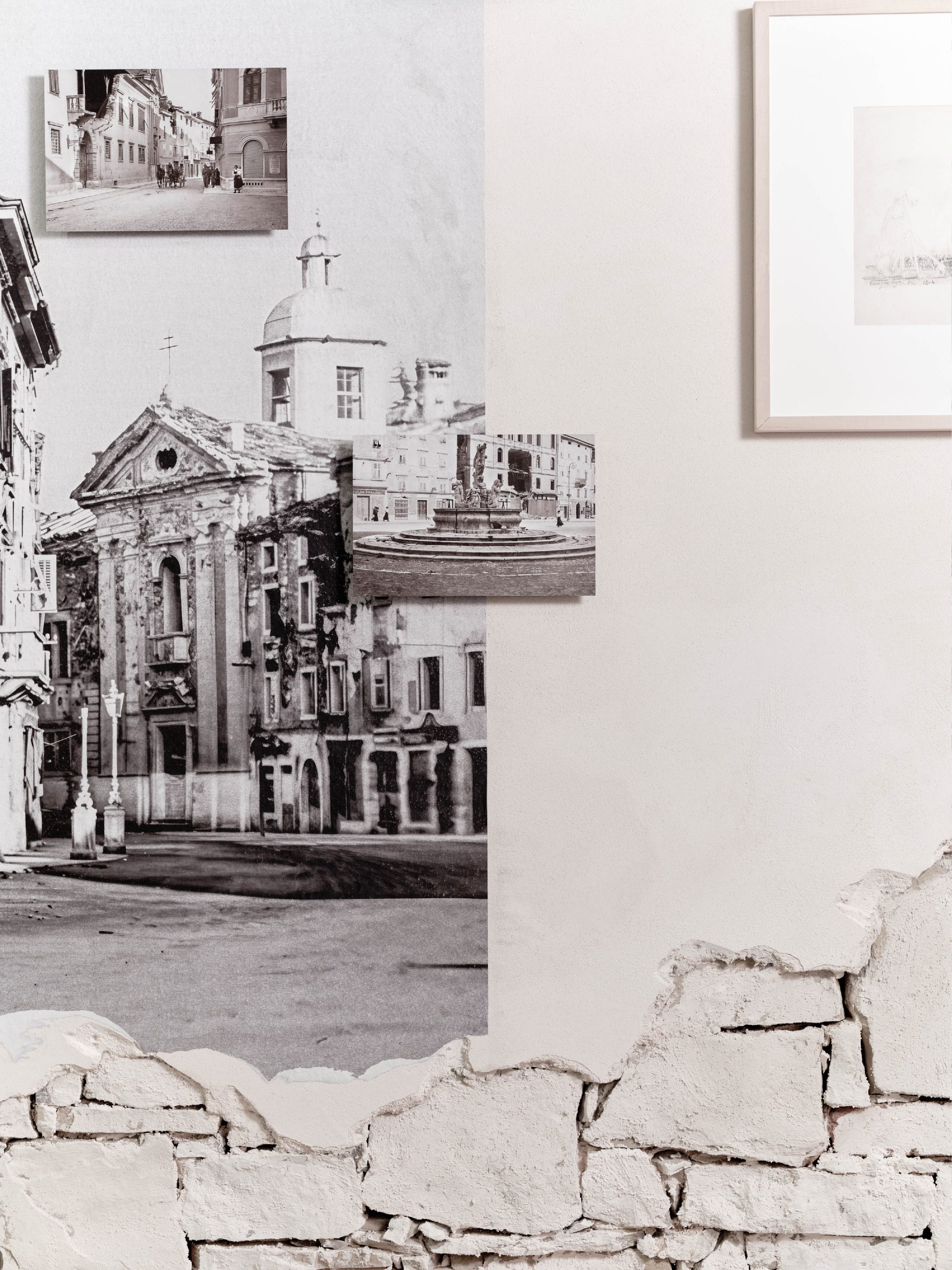
The period of the First World War reveals the story of a devastated Gorizia and the mass displacement of its inhabitants. As the war intensified, the city became a battleground of the Battles of the Isonzo, forcing civilians to flee.
Photographs and personal objects from refugee camps testify to the hardship and loss they endured, while successive armies left the city in ruins—“a city of the dead and of rats.” Out of this destruction emerged the image of “Holy Gorizia,” a symbol of a lost world shaped by the departure of the German-speaking community.
15
16
17
18
19
20
21
22
23
24
25
26
27
28
THE HOLY CITY
The period between 1921 and 1943 was marked by Fascist rule in Italy and the oppression of the allogeni, or so-called “foreign” Slovenians. In Gorizia, totalitarian policies sought to erase local identities, encapsulated in the motto “Qui si parla soltanto Italiano” (“Only Italian spoken here”), while many resisted in order to preserve their language and culture despite strict prohibitions.
Accounts from this period reflect postwar hardships, the arrival of new settlers from Italy, and the emigration of Slovenians to the Kingdom of Serbs, Croats and Slovenes.
29
30
31
32
33
34
THE OCCUPIED CITY
Between 1943 and 1947, Gorizia experienced a turbulent and violent period. The Italian capitulation and Nazi occupation created a harsh and divided reality, intensified by partisan activity and the dramatic "Forty Days of May" in 1945, seen by Slovenians as freedom and by Italians as terror.
35
36
37
38
39
40
WHOSE CITY
After the end of World War II, Gorizia experienced chaos, violence, and deportations following the arrival of the 4th Yugoslav Army, while some locals saw the troops as liberators.
The signing of the Belgrade Agreement on 9 June 1945 and the subsequent deployment of Allied forces to implement its terms marked the beginning of the post-war Military Administration (ZVU) and the creation of the new border between Italy and Yugoslavia.
41
42
43
44
THE NEW CITY
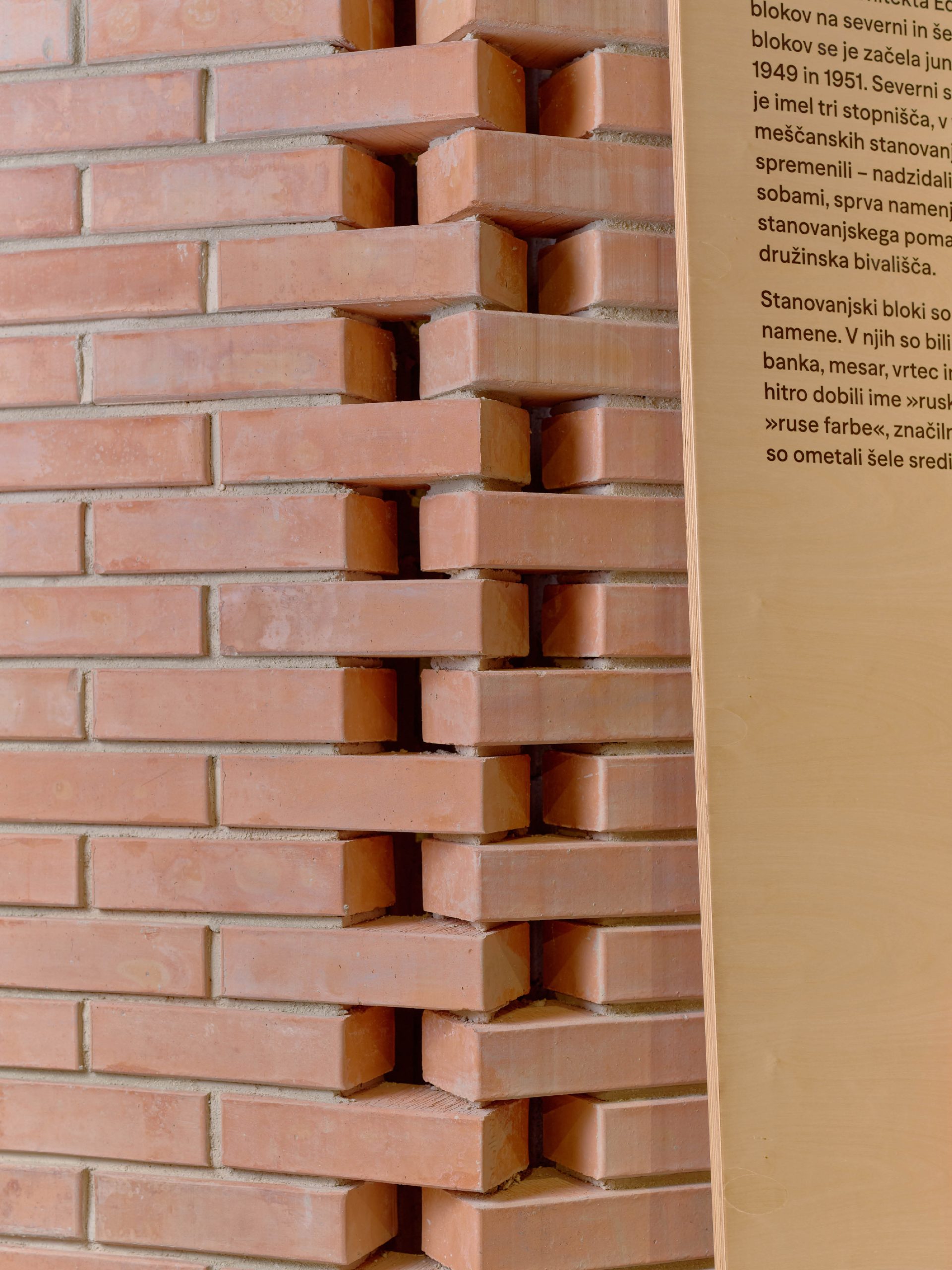
Between 1948 and 1949, limited cross-border cooperation began despite ongoing tensions. The decision to build Nova (New) Gorica was made at the highest political level, with preparations starting in 1946 and officially announced in September 1947. Around 8,000 youth brigades from across Yugoslavia built the city’s infrastructure and main buildings.
Designed by modernist architect Edvard Ravnikar following Le Corbusier’s principles, the city was planned for 20,000 residents. While the original vision emphasized light and green spaces, later revisions introduced large apartment blocks, reduced greenery, and reflected increasing political influence.
45
46
47
48
49
50
51
52
53
54
55
56
THE BORDERLESS CITY
Slovenia’s independence in 1991, accession to the EU in 2004 and entry into the Schengen Area in 2007 opened the border and transformed Trg Evrope/Transalpina Square into a symbol of European integration and the shared future of the twin cities.
Here, the final section of the exhibition turns to the present, exploring contemporary identity in the Gorizia region.
57
58
Overall, the permanent exhibition is conceived as a dynamic structure that does not conclude with a final narrative but remains open to reinterpretation and expansion. At the same time, its architectural expression does not function as a neutral backdrop, but as an active medium of historical storytelling.
59
60
61
62
Information
Project brief: A City on the Border, permanent exhibition
Location: Nova Gorica, Slovenia
Project date: 2024
Completion date: 2025
Area: 500 m²
Type: Public/Culture/Exhibition
Client: GO!25 – European Capital of Culture
Project Team
Curator: dr. Kaja Širok
Exhibition design: SVET VMES – Jure Hrovat, Ana Kreč, Žan Majetič, Marko Kavčič
Graphic design: AA & Studio Kruh – Anja Delbello, Aljaž Vesel & Gregor Makovec
Photographer: Klemen Ilovar
63
64
